

With mantras like “data are your most valuable asset” and “the future is data,” it is easy to think that more data is the best strategy for gaining more insight. But you can’t always count on that being true. What you can count on is that more data will always mean more costs (dollars, time, sometimes frustration) of collecting, storing, transforming, and governing that data.
Those costs are perfectly acceptable if your organization and the public derive great benefit from undergoing these data management efforts. But when you are engaged in new collection, reporting, and data system build-out efforts, how do you know which data you plan to collect are worth the costs given your program priorities and budget constraints? You need a data strategy!
To understand new data needs, many organizations start by asking themselves this question: What new data do we really want or are required to collect? Typically the response is a laundry list of data elements, each seemingly just as reasonable as the next. But often the list is still too many data to collect and manage successfully given resource constraints. And furthermore, the list doesn’t provide enough information to understand which data should be prioritized.
But what if we start with a different question: What are the essential (new) questions we need to answer using data? This simple switch now alters the trajectory of your conversation, because it aligns the decision making around data investments more closely and quickly with your mission and programmatic needs. Note that if your organization is regulated by another entity, you will also have to add the question: Which new data am I required to collect and report to another entity? But don’t let your strategy work stop with what you have to do. Push yourself to think also of what questions you want to answer for your own organizational objectives.
You might notice in the reframing of the question, the organization is focusing on how it will use the data, not just which data they think they need. They are on their way to creating what we call a data use case.
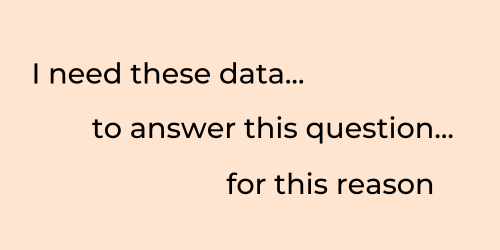
Data use cases are a collection of organized information to clarify for yourself and your colleagues what question you really want to answer using data (including questions related to mandated data collections). For each question (use case) you are also answering:
- Which data need to be collected to get you to the answer
- How your organization will use those data together to answer the question
- For what reason your organization values answering that question
- What issues (availability, reliability, quality, etc.) you think might be barriers to collecting, maintaining, or using the necessary data to answer the question
Often collected in a spreadsheet, the data use cases bring together all of an organizations real and perceived data needs in one place, allowing stakeholders to wrestle with which use cases to prioritize under current constraints (i.e., budget, time). These use cases can then be integrated into a larger organizational data strategy which identifies information technology needs, data/IT governance goals, and other data priorities in light of the organization’s resource constraints.
Serving as the guiding light for new technology and data reporting efforts, the time spent on creating data use cases pays for itself by reducing the costs of unnecessary or underutilized data technology and processes. And the cases also bring better alignment within the organization on how to more robustly use new data in the future. A win all around.
 Shift Forward Consulting LLC